Spool or poppet, 3/2 or 5/2, solenoid or lever — the directional control valve you pick determines circuit reliability for years. Here's how to work through the decision.
Before comparing part numbers, define what the valve needs to do: single-acting or double-acting actuator, momentary or continuous signal, and whether the circuit needs to fail-safe open, closed, or hold position on air loss. This single decision eliminates most of the catalogue immediately — a 3/2 valve serves single-acting cylinders and pilot signals, while a 5/2 or 5/3 valve is required for double-acting cylinders that need to extend and retract under power.
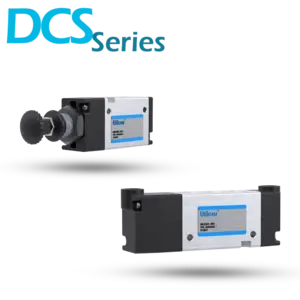
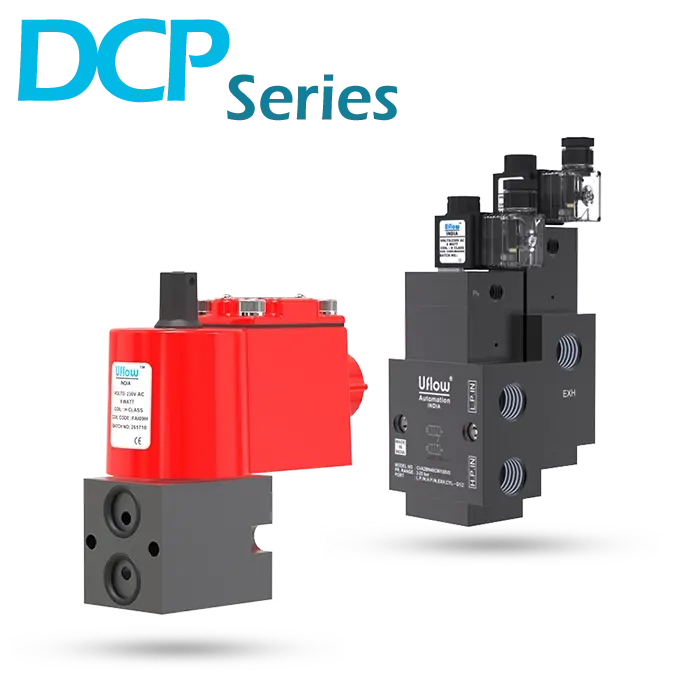
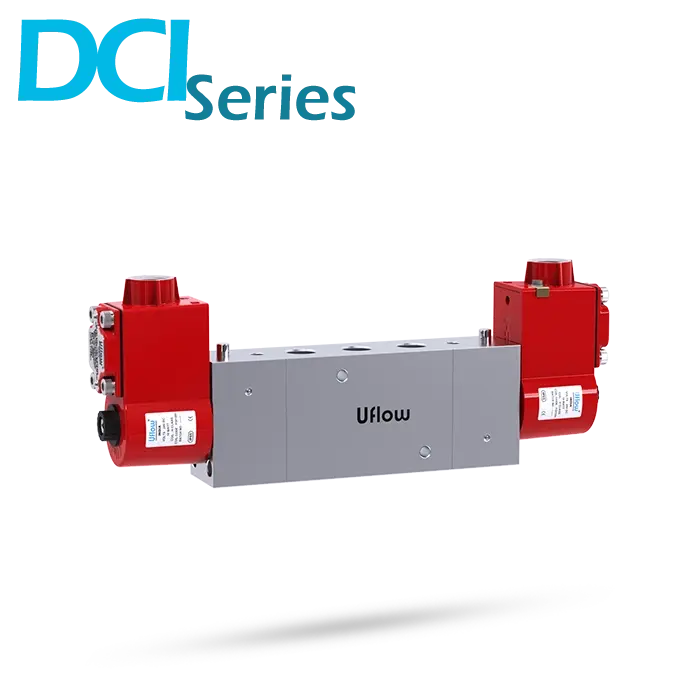
Spool valves (like the DCS Series and DCC Series) use a sliding cylindrical spool and are the standard choice for general automation — smooth switching, wide flow range, and broad compatibility with standard manifolds. Poppet valves (like the DCP Series and DCI Series) seal directly against a seat rather than sliding past O-rings, which makes them more tolerant of dry, unlubricated or marginally contaminated air — a real consideration in hot, dusty GCC plant environments where instrument air quality can drift.
Undersizing a valve's port is the most common cause of sluggish cylinder speed — the valve, not the cylinder, becomes the bottleneck. Match the valve's rated flow (LPM) to your cylinder's air consumption at the target cycle speed, then add margin for line losses. As a starting point:
Solenoid actuation gives PLC-controlled automation; lever or push-pull actuation suits manual override stations; pilot actuation is used when the controlling signal is itself pneumatic (common in safety-interlocked or hazardous-area circuits where electrical actuation is restricted). Many series, including DCS and DCP, offer all three on the same body platform — worth standardizing on one family across a plant to simplify spares.
Aluminium bodies are the default for general industrial air service. Stainless steel (SS304 or SS316) is worth the premium for washdown areas, coastal/humid installations, or any process touching corrosive media — a relevant call-out for offshore and desalination-adjacent plants across Qatar and the wider Gulf.
Send us your pressure, flow and actuation requirement — our engineers will recommend the right valve within one business day.